
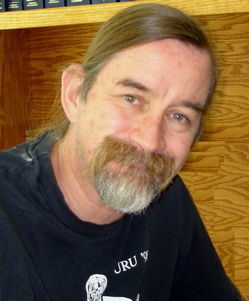
Prof. Garrison W. Cottrell
(University of California, San Diego)
Bio: Garrison (Gary) W. Cottrell is a Professor of Computer Science and Engineering at UC San Diego. He was a founding PI of the Perceptual Expertise Network, and directed the Temporal Dynamics of Learning Center for over 10 years. Professor Cottrell’s research is strongly interdisciplinary. His main interest is Cognitive Science and Computational Cognitive Neuroscience. He focuses on building working models of cognitive processes, and using them to explain psychological or neurological processes. In recent years, he has focused on anatomically-inspired deep learning models of the visual system. He has also worked on unsupervised feature learning (modeling precortical and cortical coding), face & object processing, visual salience, and visual attention. His other interest is applying AI to problems in other areas of science. Most recently he has been using deep learning to elucidate the structure of small (natural product) molecules in collaboration with Bill Gerwick at the Scripps Institute of Oceanography. He received his PhD. in 1985 from the University of Rochester under James F. Allen (thesis title: A connectionist approach to word sense disambiguation). He then did a postdoc with David E. Rumelhart at the Institute of Cognitive Science at UCSD until 1987, when he joined the CSE Department.
Title of the Talk: SPECTRE: A Spectral Transformer for Molecule Identification
Abstract: Many life-saving drugs — from penicillin to chemotherapy agents — were first discovered as natural compounds found in plants, fungi, or bacteria. Before these compounds can be developed into medicines, scientists need to decode their precise chemical structures. One of the most powerful tools for doing this is nuclear magnetic resonance (NMR) spectroscopy, which works a bit like an atomic fingerprint scanner — it probes a molecule and produces a signal pattern that reflects its structure. The catch: reading those patterns is slow, technical work that demands years of specialist training.
We built SPECTRE to change that. SPECTRE is an AI model that reads NMR data and automatically identifies what molecule it’s looking at — searching across a library of over 526,000 candidates to find the best match. It correctly identifies the right molecule 80% of the time on its first guess, setting a new benchmark for this kind of tool.
Two design choices make SPECTRE stand out. First, it accepts multiple types of NMR data, making it flexible across different experimental setups. Second, it uses a novel way of encoding molecular structure into a compact numerical form that is both more accurate and less prone to errors when comparing candidates.
Perhaps most usefully, SPECTRE doesn’t just return an answer — it shows its work. It generates visual maps highlighting which parts of the predicted and retrieved molecules are chemically similar, down to the level of individual molecular fragments. Even when no perfect match exists in the library, these fragment-level clues give chemists a meaningful head start, helping them form hypotheses and narrow in on a structure faster.
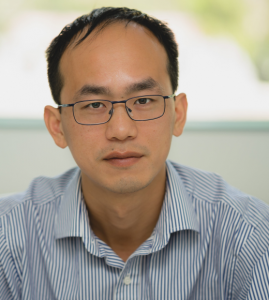
Prof. Lifeng Lai
(University of California, Davis)
Bio: Lifeng Lai is a Professor at the Department of Electrical and Computer Engineering, University of California, Davis. He received the B.E. and M. E. degrees in Information Science and Electrical Engineering from Zhejiang University, Hangzhou, China in 2001 and 2004 respectively, and the PhD degree in Electrical and Computer Engineering from The Ohio State University at Columbus, OH, in 2007. He was a postdoctoral research associate at the Department of Electrical Engineering, Princeton University from 2007 to 2009. His current research interest includes information theory, stochastic signal processing, machine learning and their applications.

Prof. Nalini Venkatasubramanian
(University of California, Irvine)
Bio: Nalini Venkatasubramanian is a Professor in the School of Information and Computer Science and Co-Director for the Center for Emergency Response Technologies at the University of California, Irvine. She has had significant research and industry experience in distributed systems, adaptive middleware, pervasive and mobile computing, cyberphysical systems, distributed multimedia, and formal methods, and has over 350 publications in these areas. She is the recipient of the NSF Career Award, multiple Teaching Excellence Awards, several best paper awards, a Test-of-Time Award by the IEEE CNOM committee, and was named as one of the “Stars in Networking” by the CRA. Prof. Venkatasubramanian has served in advisory committees for governmental agencies for smart and safe communities, steering and organizing committees of conferences on middleware, distributed computing,g and cyberphysical systems, and on the editorial boards of journals. She received her Ph.D. in Computer Science from the University of Illinois in Urbana-Champaign. Prior to arriving at UC Irvine, Nalini was a Research Staff Member at the Hewlett-Packard Laboratories in Palo Alto, California. Prof. Venkatasubramanian is an IEEE Fellow, AAAS Fellow, Fellow of the AAIS, an ACM Distinguished Engineer, and an IEEE Distinguished Contributor.
Title of the Talk: Towards AI-enabled CyberPhysicalHuman Infrastructures
Abstract: Recent advances in cyberphysical systems, Internet-of-Things, pervasive computing, and AI technologies have enabled the creation of a new wave of smart infrastructure for communities. In this talk, we will highlight our experiences with creating AI-enabled infrastructures in multiple contexts – including smart safe homes for the elderly, to community-scale smart water and power infrastructures that are resilient to urban growth and extreme events, The ability to ensure effective operation in these diverse settings requires intelligent data collection from heterogeneous device, integration with a variety of data sources and analysis of this information to generate higher-level semantic observations. We will show how adaptive middleware infused with AI methods can leverage structure, behavior and semantics of infrastructure systems to generate reliable situational awareness and support intelligent adaptations to enable community resilience.